Over our years in school we have learned many things about the human body, but I have retained very little. Being asked the question "What do you know about the human body?" I simply draw a blank. Trying to reach into my head I will now try to remember... What I know about the human body.
First, I know about the heart from 5th grade science and from taking a lifeguarding course over the summer. I know that the heart is a four chambered organ, a left and right ventricle and then the left and right atrium. I know that the heart brings in and then pumps out blood, something that is essential.
Secondly, I know that the human body is made up of millions of cells, of which we studied this year and can be seen in other blogposts. Because we are eukaryotic, our cells function differently depending on where they are and what functions they serve.
I know about many of the different organs in the body. I know that the esophagus, small intestine, large intestine, stomach and anal make up the digestive system (probably a few more...) I know that the lungs (two of them) are necessary for breathing and bring in oxygen and release carbon dioxide and other wastes. I know that your brain, besides the heart, is the most important organ in the body and has a nerve attaching itself to your back, and if you damage the nerve in anyway (such as breaking your back) you will most likely become paralyzed or some other form of permanent damage.
I know that, arteries carry blood to the heart (oxygen-deprived) and veins from the heart to other parts of the body.
I know that humans are different, and are deemed superior, because we have opposable thumbs which enable us to move and pick up things that no other species can (except monkeys, but they are very similar to us)
There are many more things that I know about the human body, except that I am drawing a blank on them now and I don't have enough room to write every thought I have.
Monday, May 9, 2011
Thursday, April 21, 2011
My Family's Genetics
![]() |
| Tongue Rolling |
1) Tongue Rolling
2) Attached Earlobes
3) Hitch Hiker's Thumbs
![]() |
| Attached Earlobes (bottom) |
4) Widow's Peak
When I asked my mom, my dad and my sister, I found the following chart:
(+ if yes, can do it/has it, - if not)
Family Genetics
Trait Mom Dad Phoebe Megan
| Hitch Hiker's Thumb |
Attached Earlobe - - - -
H.H. Thumb + + + +
Widow's Peak - - - -
As you can see, from this chart, all of the traits that we tested were the same throughout my family. This is interesting because we are all the same, and because my mom and dad shared the same trait, because of genetics and we (my sister and I) being their children, we automatically would share that same trait.
From a source, I found the following data about if these four traits were dominant or recessive:
1) Being able to roll your tongue: Dominant
2) Having attached earlobes: Recessive
3) Having a hitch hiker's thumb: Recessive
4) Widow's peak: Dominant
Because of this and from the data that I collected from my family I can determine the following:
- For tongue rolling, because it is dominant and both of my parents can roll their tongue, they are either homozygous dominant (RR) or heterozygous (Rr), we cannot confirm that from just this data.
- For earlobes, because having an unattached earlobe is dominant, both of my parents have unattached earlobes, they must be either homozygous dominant or heterozygous.
- Having a hitch hiker's thumb is recessive, of which both of my parents have. Because both of their children have a hitch hikers thumb both must be homozygous recessive (rr), because if one had a dominant gene in them, one of their offspring would not have a hitch hiker's thumb
- Having a widow's peak is dominant, and because both of my parents don't have a widow's peak, they must be homozygous recessive.
From this data we can conclude for sure if a parent is homozygous recessive, but not the difference between homozygous dominant and heterozygous. This is because you only need one dominant pairing for a person to have that trait, so, the person could show the trait and be Rr or RR, you simply don't know until you have kids, of which if one doesn't show the trait, you know you are Rr. This is not the case for my family, because when my parents had a trait, me and my sister would both have the trait, thus determining that we can't tell whether my parents are Rr or RR.
For more information on dominant vs. recessive genes see this link:
http://www.blinn.edu/socialscience/ldthomas/feldman/handouts/0203hand.htm
Wednesday, March 9, 2011
Genetic Cloning
This process is both new in the science field and greatly debated. Although few mammals have been successfully cloned, the first being Dolly in 1997, the topic of cloning animals, and humans is greatly debated. The pros of this cloning is that is creates no need for reproduction, you can just clone yourself, and if you have a good immune/health system, cloning yourself could create "the perfect race". This would be great because disease numbers would go down (almost to non-existant) and life expectancies would rise drastically. Also, if we were to clone plants and animals, we could have perfectly balanced food all of the time. The cons for cloning are also a good side. If the human race were to constantly clone DNA, it would lessen the diversity in genes, which would not allow the human race, and other animals/plants to stop adapting. This would be terrible for everyone, because adaption is necessary in life.
In a recent study, it shows that it is possible to take fossils of extinct species and clone them, making them not extinct anymore. This is done by taking things such as bones from a museum, ancient hair and other cellular items and doing a Somatic Cell Nuclear Transfer with them, and then putting them in a surrogate similar to the species itself. This idea, although completely remarkable, brings up serious problems. If extinct animals were to come back, such as mammoths and dinosaurs, it would seriously disrupt the ecosystem already strained today. With a "new" organism fighting for food comes, the ecosystem is greatly altered, changing the way of life for many animals. http://www.cbsnews.com/stories/2010/01/07/60minutes/main6067594.shtml
Genetic cloning is a remarkable study, and seems only used in fiction novels. This is real, and has potential to change the way of life itself completely.
Sources:
- http://www.arhp.org/publications-and-resources/patient-resources/printed-materials/cloning
- http://learn.genetics.utah.edu/content/tech/cloning/whatiscloning/
Wednesday, February 23, 2011
Laron Syndrome: A key to cancer prevention?
In a current event article by MSNBC, there is a group of Ecuadorian people with the extremely rare disease Laron Syndrome. This disease results in dwarfism, affecting only two-hundred fifty people world wide. In the genes, there is a mutation in the gene that codes the growth hormones in the body, affecting the growth of that particular person with Laron Syndrome. Because of the mutation, people with this disease have low levels of insulin-like growth factor 1 (IGF1). Why is this disease so special? The Ecuadorian people, because of this disease and low levels of IGF1 are nearly immune to both cancer and diabetes. This is because people with high levels of IGF1 are more at risk for cancer, meaning that they are growing at a faster rate (IGF1 directly influencing the speed at which you cells grow). People who use IGFI as a "steroid" (to grow bigger at a faster rate) are also more likely at risk for cancer and other diseases. (Link)
This article shows the beginning of a potential cure to cancer, if it were possible to lower the levels of IGF1 in high risk people, of all people in general, the risk of cancer would be very, very slim. This article was very uplifting, stating that you don't have to have this disease just to have low levels of IGF1, you can have low levels and not have the disease at all, just be pretty much immune to cancer!
Although this is a good sign, and scientists will further discover ways to lower normal people's IGF1 levels, there is always a risk with playing with someone's genes. If scientists thought that they could change the coding of a person's genes for the sake of making someone immune to cancer and diabetes, one slight mistake could result in difficulties for the rest of their lives, and easily be fatal for that person.
Overall, this article was extremely interesting and informative about the problems and solutions today in cancer research.
For more information, here is the link to the actual article:
http://www.msnbc.msn.com/id/41632071/ns/health-aging/
This article shows the beginning of a potential cure to cancer, if it were possible to lower the levels of IGF1 in high risk people, of all people in general, the risk of cancer would be very, very slim. This article was very uplifting, stating that you don't have to have this disease just to have low levels of IGF1, you can have low levels and not have the disease at all, just be pretty much immune to cancer!
Although this is a good sign, and scientists will further discover ways to lower normal people's IGF1 levels, there is always a risk with playing with someone's genes. If scientists thought that they could change the coding of a person's genes for the sake of making someone immune to cancer and diabetes, one slight mistake could result in difficulties for the rest of their lives, and easily be fatal for that person.
Overall, this article was extremely interesting and informative about the problems and solutions today in cancer research.
For more information, here is the link to the actual article:
http://www.msnbc.msn.com/id/41632071/ns/health-aging/
Monday, February 14, 2011
Lung Cancer
The Cell Cycle. Every living this has it, necessary to grow and simply be alive. The Cell Cycle is a very delicate process, any malfunctions and serious, fatal things could happen to any living organism. Within the cell cycle, there are genes that keep the cell cycle “in check” from not going to fast and producing an unnecessary amount of cells. These genes are called tumor-suppressors and proto-oncogenes. When these are not working or mutated, an excessive amount of cells will occur. If this mass is a mass of mutated cells, the outcome will most likely be cancer. Cancer is a terrible disease that many people have heard of and have dealt with within their families.
Cancer is a broad statement; there are many types of cancer. One of the most common types of cancer is lung cancer. Lung cancer is a carcinoma; cancer that begins in the skin or in tissues that line or cover the body organs. Lung cancer forms in the tissues of the lung. Lung cancer begins when there is a genetic alteration in your cells, and there is a lack of equilibrium between proto-oncogenes and oncogenes. Oncogenes are a mutated form of proto-oncogenes and make the cell cycle go faster. When the cell cycle goes faster, a mass of genetically mutated cells are produced in the tissue of the lung causing malfunctions in the lung itself.
Lung cancer itself can be broken down into two types, Small Cell Lung Cancer and Non-Small Lung Cancer. These two types are diagnosed based on the size of the cells and how they look under a microscope.
Small Cell Cancer (SCLC) is much more rare than Non-Small Cell, only about 15% of cases are Small Cell. Within SCLC, there are three different types: small cell carcinoma (oat cell cancer), mixed small cell/large cell carcinoma and combined small cell carcinoma. Most SCLC cases are oat cell. SCLC is the most aggressive form of lung cancer compared to the other type. It is mainly caused by smoking and starts in the bronchi (breathing tubes) in the center of the chest. This type of lung cancer grows quickly and produces large tumors. Because SCLC grows so quickly, it also metastasizes rapidly to other parts of the body including the brain, liver and bone. Metastasis is when a part of a cancerous tumor breaks off from the original tumor and spreads to another part of the body, spreading the cancer. When you have SCLC, there are many symptoms that come from it, including bloody sputum (spitting up blood), chest pain, coughing, loss of appetite, shortness of breath, weight loss, wheezing, facial swelling, fever, hoarseness or changing voice, difficulty swallowing and weakness. Once the doctor diagnoses SCLC lung cancer, it has most likely spread to other parts of the body, most often the brain.
Because SCLC spreads so quickly, little treatment can seriously help the disease. The treatments used to help SCLC consists of chemotherapy and for extensive SCLC a combination of chemotherapy and radiation treatment take place. Chemotherapy is using drugs to kill cancer cells and stop new ones from growing and is often used when the cancer has spread. Chemotherapy is also used to help relieve the cancer pain when it has spread to the bones. Radiation therapy is powerful x-rays or other forms of radiation to kill cancer cells. This treats the cancer and helps relieve symptoms. SCLC is a very deadly form of cancer and only 6% of people with it are still alive after five years of the diagnosis. With treatment, most people can often prolong their life span from six to twelve months. To prevent the risk of lung cancer, simply stop smoking or never start smoking.
Non-Small Cell Lung Cancer (NSCLC), although less fatal than SCLC is still a very harmful cancer. Between the two types of lung cancer, NSCLC is the most common. Within NSCLC there are three types: Aden-carcinomas, found in the outer area of the lung, Squamous cell carcinomas, usually found in the center of the lung by the bronchus, and large cell carcinomas, which can occur in any part of the lung. The causes of NSCLC consist of environmental factors: smoking, second-hang smoke, high levels of air pollution, poor drinking water and working with asbestos, products using chloride and formaldehyde. Symptoms for NSCLC include: a cough that doesn’t go away, coughing up blood, shortness of breath, wheezing, chest pain, loss of appetite, losing weight without trying and fatigue.
Non-Small Lung Cancer spreads much slower than Small Lung Cancer, and can be treated with much higher levels of success. Treatment depends on the stage of cancer, but surgery is most often the first line of treatment for patients that has not had the cancer spread beyond the lymph nodes. When having surgery, the surgeon would remove one of the lobes of the lung (lobectomy), a small part of the lung (wedge or segment removal) or an entire lung (pneumonectomy). Although surgery can be a successful treatment, some patients need chemotherapy, laser therapy or photodynamic therapy (using a light to activate a drug in the body which kills cancer cells).
Depending on the stage of NSCLC will determine the expectations there will be on being cured. Stage I and II NSCLC can be cured with surgery, which has a 50% chance of being completely cured. Stage III NSCLC can be cured in some cases and stage IV is almost never cured, and treatment can be used to extend and improve the quality of life.
Lung Cancer is a very serious disease and in 2010 in the United States, there were 222,520 new cases and 157,300 deaths. Lung cancer is just one of the many different types of cancer, a disease that effects so many lives and families annually. Even the smallest preventions should take place; don’t smoke. If we can lower the amount of pollution in the air and lower the amount of smokers, the amount of deaths taking place due to lung cancer will most likely also lower, helping so many families around the world.
Sources:
Sunday, January 9, 2011
Plants! Photosynthesis!
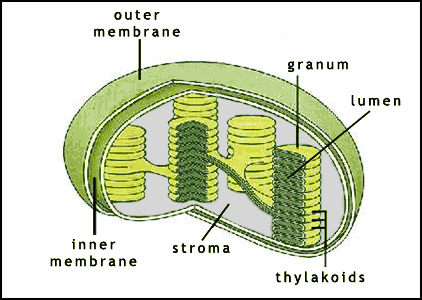
Photosynthesis, a process that converts sunlight into sugars which can then be used for energy. This process happens in autotrophs, organisms like plants, algae and many bacteria. For explanation, I will be using a plant cell. In a plant cell, there are chloroplasts, which is where photosynthesis takes place. In the chloroplast (diagram on left), there are stacks of thylakoids where the first step of photosynthesis, the Light Reaction, takes place.
Process of Photosynthesis: 6CO2 + 6H2O + light --> C6H12O6 + 6O2
The Light Reaction:
The light reaction begins with taking photons from sunlight, sending these photons into the Photo Synthesis II and PS I. When in the PS II and I, the light bounces off pigments, eventually landing at the bottom, at the reaction center. Here, an electron gets "excited" from the energy collected from the photon, and the electron is shot from the PS II to the PS I. When this happens, energy is able to be used and push an H+ ion from the Stroma to the Lumen of the chloroplast (See upper diagram). Then, another electron in the PS I is "excited" and pushed to the stroma, where NADP+ picks it up and transfers to NADPH. The electron from PS II then replaces the electron from PS I. This brings up the problem: Where does the electron from PS II get replaced? To answer this, water is broken down into H+, e- and O2, where the e- replaces the other electron, and the H+ waits to be pushed into the Lumen.
After this process, there are H+ in the Lumen, but because of diffusion, the H+ wants to go back down into the Stroma. They do this by going through the ATP synthase, where when they go down, ATP is reduced, producing ATP from the Light Reaction.
Inputs: Photons, water
Outputs: NADPH and O2
*NADPH to be used in the next step, the Calvin Cycle
The Calvin Cycle:
In the Stroma of a chloroplast, the calvin cycle takes place, inputting CO2, ATP and using the NADPH produced in the light reaction. To start the cycle, 3 RuBP, a product already there in the cycle (a five carbon sugar) is joined with 3 C02 to produce 3 six carbon molecules. Because this six carbon molecule is so unstable, it is quickly broken down into 6 3-carbon molecules. Then, 6ATP and 6NADPH are oxidized and the energy from them is used to rearrange the 3 carbon molecules. After this, one 3 Carbon molecule (PGAL) is released, and the other 5 3 carbon molecules are rearranged into the starting RuBP, using the help of 3ATP. The PGALs taken out of this cycle are then used to form glucose, a sugar that can then be used in cellular respiration to make energy.
Inputs: CO2, NADPH and ATP
Outputs: Glucose
These two processes make up photosynthesis, producing sugars in plants for future use as energy.
Process of Photosynthesis: 6CO2 + 6H2O + light --> C6H12O6 + 6O2
The Light Reaction:
After this process, there are H+ in the Lumen, but because of diffusion, the H+ wants to go back down into the Stroma. They do this by going through the ATP synthase, where when they go down, ATP is reduced, producing ATP from the Light Reaction.
Inputs: Photons, water
Outputs: NADPH and O2
*NADPH to be used in the next step, the Calvin Cycle
The Calvin Cycle:
In the Stroma of a chloroplast, the calvin cycle takes place, inputting CO2, ATP and using the NADPH produced in the light reaction. To start the cycle, 3 RuBP, a product already there in the cycle (a five carbon sugar) is joined with 3 C02 to produce 3 six carbon molecules. Because this six carbon molecule is so unstable, it is quickly broken down into 6 3-carbon molecules. Then, 6ATP and 6NADPH are oxidized and the energy from them is used to rearrange the 3 carbon molecules. After this, one 3 Carbon molecule (PGAL) is released, and the other 5 3 carbon molecules are rearranged into the starting RuBP, using the help of 3ATP. The PGALs taken out of this cycle are then used to form glucose, a sugar that can then be used in cellular respiration to make energy.Inputs: CO2, NADPH and ATP
Outputs: Glucose
These two processes make up photosynthesis, producing sugars in plants for future use as energy.
Thursday, December 16, 2010
Cellular Respiration
As our science project this week, we had to create a description of cellular respiration through video, song, etc. We choose to do a video featuring claymation-stop-and-go pictures and acting it out, with the help of our classmates. This is our video, hope you enjoy it!
Sunday, December 5, 2010
Glycolysis and the Krebs Cycle Explained
Sunday, November 28, 2010
Phenlylalanine: Key to Healthier Food?
If scientists were able to decrease the amount of phenylalanine in plants, that would lead to a reduction of lignin, which would improve the digestibility of materials originally blocked by the amino acid, creating more biofuel to be easily digested. If scientists could increase phenylalanine in plants, it could potentially boost the nutritional value in some foods. This is because it would increase the amount of anti-oxidents produced in plants (by phenylalanine), which when digested by humans, would have an increased amount of nutritional value.
Finding this gene is important, because now they have all the components needed to replicate this amino acid, hopefully being able to change the amount of phenylalanine in plants, increasing or decreasing depending on the desired function (biofuel or nutrition)
Sources: http://www.biologynews.net/archives/2010/11/22/gene_find_could_lead_to_healthier_food_better_biofuel_production.html
Do Fish Feel Pain?
Do fish feel pain? Pain like humans do? Study done in April of 2009 says they do.
In this study, there were two groups of fish, one injected with morphine, a pain reliever, and the other with a placebo, saline, which is a kind of medicine used to relieve physical pains psychologically (a fake pain killer). After injected, they were treated to a burning sensation, which would not damage any tissue. Both groups of fish wriggled as a response to the burning. However, after time, the fish with morphine went on their day unaffected, while the fish that had gotten saline were weary.
(Click image to enlarge)
This shows that fish feel pain because the fish with the painkillers were unaffected and went on the day as if nothing happened, while the fish with the fake painkillers were obviously affected.
From this study, scientists begin to think that fish do feel pain like humans, as previously thought that they do not.
For more information on this study go to: http://www.livescience.com/animals/090430-fish-feel-pain-too.html
In this study, there were two groups of fish, one injected with morphine, a pain reliever, and the other with a placebo, saline, which is a kind of medicine used to relieve physical pains psychologically (a fake pain killer). After injected, they were treated to a burning sensation, which would not damage any tissue. Both groups of fish wriggled as a response to the burning. However, after time, the fish with morphine went on their day unaffected, while the fish that had gotten saline were weary.
This shows that fish feel pain because the fish with the painkillers were unaffected and went on the day as if nothing happened, while the fish with the fake painkillers were obviously affected.
From this study, scientists begin to think that fish do feel pain like humans, as previously thought that they do not.
For more information on this study go to: http://www.livescience.com/animals/090430-fish-feel-pain-too.html
Sunday, November 7, 2010
Osmoregulation in Sharks
"Osmoregulation is the control of the levels of water and mineral salts in the blood." (Link). Osmoregulation relates to homeostasis, which is where cells have the correct amount of water, mineral salts, glucose and temperature. In every organism, they are trying to create a perfect homeostatic environment, where they can live and thrive as a healthy living thing. Each different organism must do different things to create this homeostatic environment. Sharks are included in these organisms.
Sharks are special because their blood is naturally isotonic to where is lives. This means that the number of solutes inside is equal to the water around the shark. Because of this, sharks are considered osmoconformers, the opposite of osmoregulators. This is usual for marine organisms.
Sharks are able to achieve this isotonic state because of the high concentration of urea and trimethylamine N-oxide (TMAO) in them. Because of this concentration, most sharks are not able to survive in freshwater environments. An exception to this rule, however is the the Bull Shark. In sharks, their kidneys are used to release the salt into the ocean, and determine how much. If a shark were placed in a freshwater environment, their kidney would not be able to adapt to the change in saltiness, causing the shark to die because they can't keep an isotonic state of living. Bull Sharks are different because in a gradual change from ocean to freshwater (example: migrating), their kidneys are able to adapt to these changes, and keep an isotonic state.
Sharks are special because their blood is naturally isotonic to where is lives. This means that the number of solutes inside is equal to the water around the shark. Because of this, sharks are considered osmoconformers, the opposite of osmoregulators. This is usual for marine organisms.
Monday, October 25, 2010
Cell Community Comparisons
This week for our blog post, we had to make a Glogster comparing a cell community to any community that we wanted. I chose the New York Yankees, because I believe their team and organization make a great comparison towards eukaryotic cells. Click on the blog below to see this glog.
Wednesday, October 13, 2010
Bad Bacteria: Tuberculosis
Of all the bacteria in existence, almost 99% are good, helpful bacteria. The other 1%, however, is harmful towards the body and can make you very sick, sometimes fatally ill.
One type of harmful bacteria is Tuberculosis, caused by the Mycobacterium tuberculosis bacteria. This disease is transmitted through the air, but is nearly impossible to catch with one social interaction with someone infected. If you are exposed constantly, though, you could catch this disease. 90% of the people who are infected with the disease will stay inactive, meaning they still have the bacteria in them, but they show no signs or symptoms and can't spread the disease. These people, however, can become active and become sick. This means that the remaining 10% have the active bacteria can result in serious sickness, even death.
Tuberculosis is an infection that spreads in your body through the lymph nodes and bloodstream. Although these bacteria can travel anywhere within the body, they are most likely to end up in the lungs. These bacteria kill the tissue in the organs they infect.
Symptoms of TB include: A bad cough that lasts 3 weeks or longer, weight loss, coughing up blood or mucus, weakness or fatigue, fever and chills and night sweats. Although TB can be fatal, there are ways to treat it. To treat TB, usually you take antibiotics ranging from six to nine month to destroy the disease, and the differences in antibiotics depend on your age, overall health, drug resistance, form of TB and the infected location in the body. People who have inactive TB can also take these antibiotics to prevent it from becoming active.
Mycobacterium tuberculosis: Mycobacteria are waxy celled, pleomorphic rods, which range from 2-4 micrometers in length, and .2-.5 um in width. These bacilli cells also have a high concentration of lipids in them, called mycolic acids. Because of this, they have a resistance to many antibiotics. Also, these lipids are hydrophobic and affect the permeability, allowing of liquids or gases to pass through, in the cell wall. These are found in habitats such as water or soil. This specific TB causing bacteria has been causing harm since before human times. Evidence shows that this transferred over to humans through cows in 8000-4000 B.C., through milk consumption. For more information on this bacteria, go to this website
Sources:
http://www.webmd.com/lung/understanding-tuberculosis-basics
http://www.nlm.nih.gov/medlineplus/tuberculosis.html
http://tinyurl.com/27rmhuw
http://www.microbiologybytes.com/video/Mtuberculosis.html
http://www.textbookofbacteriology.net/tuberculosis.html
One type of harmful bacteria is Tuberculosis, caused by the Mycobacterium tuberculosis bacteria. This disease is transmitted through the air, but is nearly impossible to catch with one social interaction with someone infected. If you are exposed constantly, though, you could catch this disease. 90% of the people who are infected with the disease will stay inactive, meaning they still have the bacteria in them, but they show no signs or symptoms and can't spread the disease. These people, however, can become active and become sick. This means that the remaining 10% have the active bacteria can result in serious sickness, even death.
Tuberculosis is an infection that spreads in your body through the lymph nodes and bloodstream. Although these bacteria can travel anywhere within the body, they are most likely to end up in the lungs. These bacteria kill the tissue in the organs they infect.
Symptoms of TB include: A bad cough that lasts 3 weeks or longer, weight loss, coughing up blood or mucus, weakness or fatigue, fever and chills and night sweats. Although TB can be fatal, there are ways to treat it. To treat TB, usually you take antibiotics ranging from six to nine month to destroy the disease, and the differences in antibiotics depend on your age, overall health, drug resistance, form of TB and the infected location in the body. People who have inactive TB can also take these antibiotics to prevent it from becoming active.
Mycobacterium tuberculosis: Mycobacteria are waxy celled, pleomorphic rods, which range from 2-4 micrometers in length, and .2-.5 um in width. These bacilli cells also have a high concentration of lipids in them, called mycolic acids. Because of this, they have a resistance to many antibiotics. Also, these lipids are hydrophobic and affect the permeability, allowing of liquids or gases to pass through, in the cell wall. These are found in habitats such as water or soil. This specific TB causing bacteria has been causing harm since before human times. Evidence shows that this transferred over to humans through cows in 8000-4000 B.C., through milk consumption. For more information on this bacteria, go to this website
Sources:
http://www.webmd.com/lung/understanding-tuberculosis-basics
http://www.nlm.nih.gov/medlineplus/tuberculosis.html
http://tinyurl.com/27rmhuw
http://www.microbiologybytes.com/video/Mtuberculosis.html
http://www.textbookofbacteriology.net/tuberculosis.html
Wednesday, October 6, 2010
Macromolecule Lab
In class, we did a lab testing substances for four different macromolecules (Protein, glucose, starch and lipids). These substances included egg whites, egg yolks, potatoes, apples, onions, strawberries and lemons. My substance was onion, which tested positive for protein and glucose and negative for starch and lipids.
This nutrition fact proves what we found. It says that there are carbohydrates in onions. Also, it says that there is one gram of proteins in onions, which we also tested positive for. This nutrition fact also says that there is zero grams of fat in an onion, which we tested negative in. In this picture, it doesn't say anything about starch, even though onions don't have starch in it. This plant website explaining starch has an excerpt that says "Bulbs like garlic and onion store food in the form of sugar rather than starch."
Through this lab, we were able to find out what substances had what in them. This lab was extremely interesting because we could test things that we eat in our everyday lives.
This nutrition fact proves what we found. It says that there are carbohydrates in onions. Also, it says that there is one gram of proteins in onions, which we also tested positive for. This nutrition fact also says that there is zero grams of fat in an onion, which we tested negative in. In this picture, it doesn't say anything about starch, even though onions don't have starch in it. This plant website explaining starch has an excerpt that says "Bulbs like garlic and onion store food in the form of sugar rather than starch."
Through this lab, we were able to find out what substances had what in them. This lab was extremely interesting because we could test things that we eat in our everyday lives.
Wednesday, September 29, 2010
Lipids
Of the four macromolecule categories, containing carbohydrates, lipids, proteins and nucleic acids, I decided to do a Jing video explaining lipids, fats and oils that can be used in an organism for many reasons.
Tuesday, September 21, 2010
The Properties of Water
Water is one of the most vital elements on the planet. There are many reasons that water is so vital, including properties that make water so special:
1) Universal Solvent: This property proves how vital water is because almost anything can dissolve into it. This is possible because when water is formed, the bond (between hydrogen and oxygen) is called a polar covalent bond. This bond is when electrons need to bond with another to fill their electron shells, but the electrons don't share equally. Because of this, one side of the water bond is slightly negative, and the other is positive, as shown in this picture link. Because this bond is both negative and positive, atoms that both have a negative charge and positive charge are able to dissolve into it, thus making it possible for almost anything to dissolve into water.
2) Polarity: Polarity is when a compound of polar covalent bonds have a slightly negative side and a slightly positive side. This allows water to do many things including being a universal solvent, explained above, adhesion, cohesion, and specific heat all explained below.
3) Adhesion: Adhesion is when a substance "clings" to another substance. Adhesion happens because water, being a polar molecule, attracts both negative and positive objects. Because of this, water will cling to another object. As a result of adhesion there is capillary action. This action is, when in a narrow enough space, water will climb up the sides of the object it's clinging to. This allows plants to suck water in from the ground and reach their top, allowing them to live.
4) Cohesion: Cohesion is the exact opposite of adhesion. In cohesion, instead of sticking to other things, it sticks to itself. It sticks to itself because water is a polar covalent bond, and can form a hydrogen bond, which makes it stick to itself. One example of this is a raindrop. When falling, the drops of water stick together because of cohesion.
5) Surface Tension: Surface tention is the tightness across the surface of water. This is caused by cohesion because the water is sticking to itself, causing the surface of the water to have a tight layer that if an if this object is light enough, it will not break through the surface and be able to stand on top of it. An example is this video, and of the picture below.
6) Specific Heat: Specific heat is the amount of energy needed to raise one gram of something up 1° Celsius. The reason this is special towards water is because it has a high specific heat. This is because hydrogen bonds (Polar Bonds that weakly bond to other polar bonds) when bonded together have a higher Specific heat than regular bonds, as shown in this video.
Specific Heat Explained
This property of water is essential to organisms because it keeps us from overheating and cooling because it takes so much energy to heat up/cool down water.
7) Density: Density is described as the amount of mass in a given space. With that said, it is usual for liquid substances to be less-dense than their solid state because the solid molecules are more condensed into a place than liquids. Water is so cool because it does the exact opposite. When water is in a solid state, it will actually float on top of liquid water. It does this because in liquid water, the molecules are really close together and when they change forms into solids they spread out and form a lattice formation. As shown in these pictures, the left being a solid formation, and the right being liquid.
8) pH (acidity): A pH scale is to test the acidity in a given substance. The reason that substances have different pH levels is due to ionization. Ionization is the conversion of a non-ionic compound into an ion. An ion atom is an atom with ranging numbers of electrons, and a non-ionic atom is when the number of electrons and protons are equal. When ionization happens, a bonded molecule (H2O) breaks apart, and one element takes another element's electron, causing one element to be negative (OH-) and one to be positive (H+). In water, for example, there are an equal amount of positive and negative atoms, which means that it has a pH of 7, or neutral. This is because if, for some reason, a substance has an unequal balance of negative and positive elements, the acidity will shift to more acidic or more basic.
*** For a video on Cohesion, Adhesion, and Surface Temperature, see here.
1) Universal Solvent: This property proves how vital water is because almost anything can dissolve into it. This is possible because when water is formed, the bond (between hydrogen and oxygen) is called a polar covalent bond. This bond is when electrons need to bond with another to fill their electron shells, but the electrons don't share equally. Because of this, one side of the water bond is slightly negative, and the other is positive, as shown in this picture link. Because this bond is both negative and positive, atoms that both have a negative charge and positive charge are able to dissolve into it, thus making it possible for almost anything to dissolve into water.
2) Polarity: Polarity is when a compound of polar covalent bonds have a slightly negative side and a slightly positive side. This allows water to do many things including being a universal solvent, explained above, adhesion, cohesion, and specific heat all explained below.
3) Adhesion: Adhesion is when a substance "clings" to another substance. Adhesion happens because water, being a polar molecule, attracts both negative and positive objects. Because of this, water will cling to another object. As a result of adhesion there is capillary action. This action is, when in a narrow enough space, water will climb up the sides of the object it's clinging to. This allows plants to suck water in from the ground and reach their top, allowing them to live.
4) Cohesion: Cohesion is the exact opposite of adhesion. In cohesion, instead of sticking to other things, it sticks to itself. It sticks to itself because water is a polar covalent bond, and can form a hydrogen bond, which makes it stick to itself. One example of this is a raindrop. When falling, the drops of water stick together because of cohesion.
5) Surface Tension: Surface tention is the tightness across the surface of water. This is caused by cohesion because the water is sticking to itself, causing the surface of the water to have a tight layer that if an if this object is light enough, it will not break through the surface and be able to stand on top of it. An example is this video, and of the picture below.
6) Specific Heat: Specific heat is the amount of energy needed to raise one gram of something up 1° Celsius. The reason this is special towards water is because it has a high specific heat. This is because hydrogen bonds (Polar Bonds that weakly bond to other polar bonds) when bonded together have a higher Specific heat than regular bonds, as shown in this video.
Specific Heat Explained
This property of water is essential to organisms because it keeps us from overheating and cooling because it takes so much energy to heat up/cool down water.
7) Density: Density is described as the amount of mass in a given space. With that said, it is usual for liquid substances to be less-dense than their solid state because the solid molecules are more condensed into a place than liquids. Water is so cool because it does the exact opposite. When water is in a solid state, it will actually float on top of liquid water. It does this because in liquid water, the molecules are really close together and when they change forms into solids they spread out and form a lattice formation. As shown in these pictures, the left being a solid formation, and the right being liquid.
*** For a video on Cohesion, Adhesion, and Surface Temperature, see here.
Friday, September 10, 2010
Prolog, Expectations, and Goals for the Year
After reading the prolog in our textbook and the class expectations on the website, I can conclude that this year will be nothing like IPS. The only similarity that I can think of is that we will have labs and lab reports. Although we will have these labs, I can already tell that the things we will be testing are going to be completely different from separating Sludge and taking the boiling points. Although this course is clearly going to be different from any Science we've taken, I can say that I'm excited. I think it will be really exciting to learn about your DNA, and testing it for yourself (I saw the 9th graders last year testing it). My goals for this year are to fully understand the material, and be able to use it in other contexts. Using technology to get to this goal can definitely help. One example of this is using this blog to look through everything. I like how this year, all or a lot of our work will be filled out on our own blog, so if we are confused, or need to remember a lab, or a homework response that we posted, we can just scroll down and find it.
Subscribe to:
Posts (Atom)